Lockheed Martin Corporation
Investment Analysis · LMT (NYSE)
1. Executive overview
| Investment snapshot | Input |
|---|---|
| Recommendation | BUY |
| Current Price | $505.41 |
| 12 Month Target | $591.61 |
| Price Upside | 17.1% |
| Ticker | LMT (NYSE) |
| Primary valuation method | DCF Valuation (Refer to Appendix for Full DCF Model) |
2. Executive summary
We initiated coverage on LMT and recommend a BUY on the stock with moderate conviction. Our 12-month target price of $592 per share implies a 17.1% price appreciation from its reference quote of $505.41. Including a $13.80 per share dividend, the total return potential is 19.8% over a 12-month investment horizon. Our target price, based on a combination of forward discounted cash flow and forward earnings valuation (FY2027), is based on our DCF model included in the Appendix to this report, as well as forward earnings valuation using consensus analyst estimates.
Lockheed’s main growth drivers are its missile production, its Military Space programs and its F-35 franchise, which has a very large revenue base. However, each of these three parts of the business needs good operating execution to convert its growing order book into profitable deliveries and cash.
3. Investment Thesis
3.1 Thesis 1: Contracted missile demand drives growth
Contracted air and missile defence demand forms the backbone of Missiles and Fire Control’s (MFC) contribution to LMT which is the main growth engine of the business. Specifically, MFC has a 7 year $35bn THAAD contract and 7 year $58.62bn PAC-3 MSE contract which underpins current production ramp, and future deliveries.
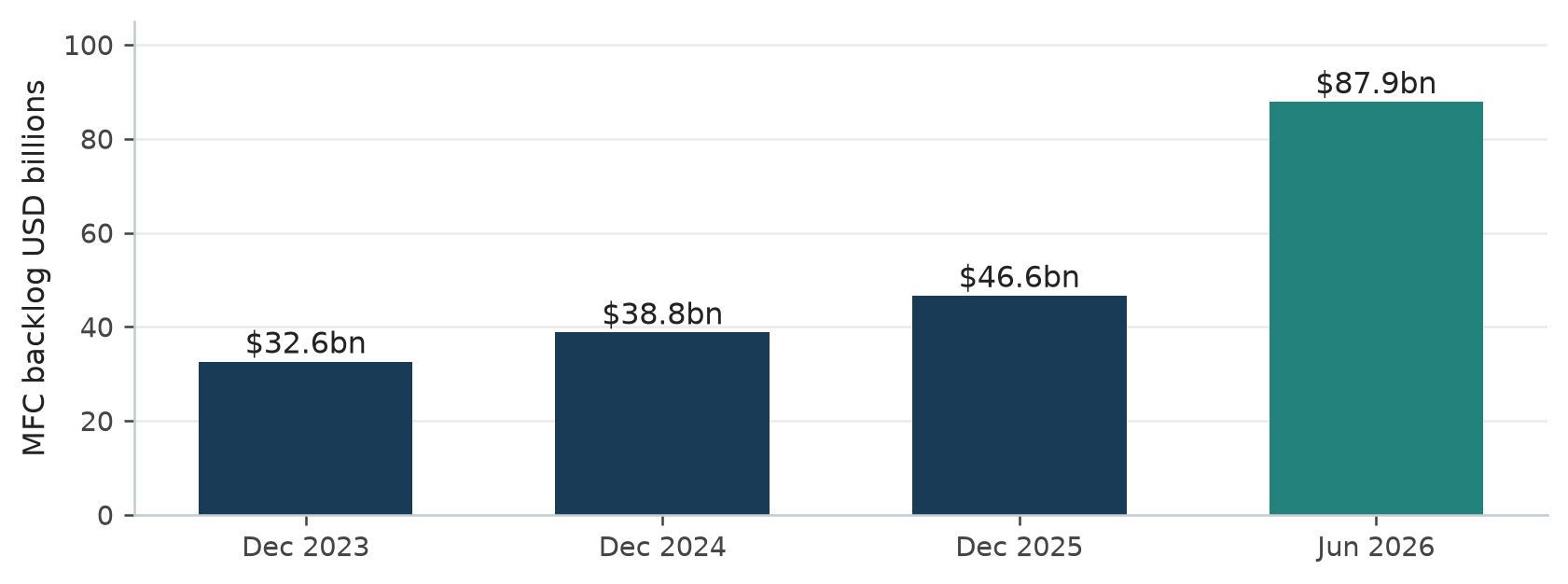
Base case expectation is that MFC sales grow from $16.8bn in 2026 to $25.9bn in 2030 as capacity is added and production ramps. Operating margins are expected to expand from 14.4% to 15.0% over the same time frame provided efficient production is maintained and there are no supplier issues or cost overruns on fixed price contracts.
3.2 Thesis 2: Military satellites expand Space revenue
Recent awards and strategic programs in the military satellite sector are expected to provide a meaningful boost to Space revenues. Notable is the recent agreement for the Tranche 3 Tracking Layer of satellites which will comprise 18 satellites at a possible value of $1.1bn to be launched in FY29. Notably, four awards were given in order to retain competition for future work.
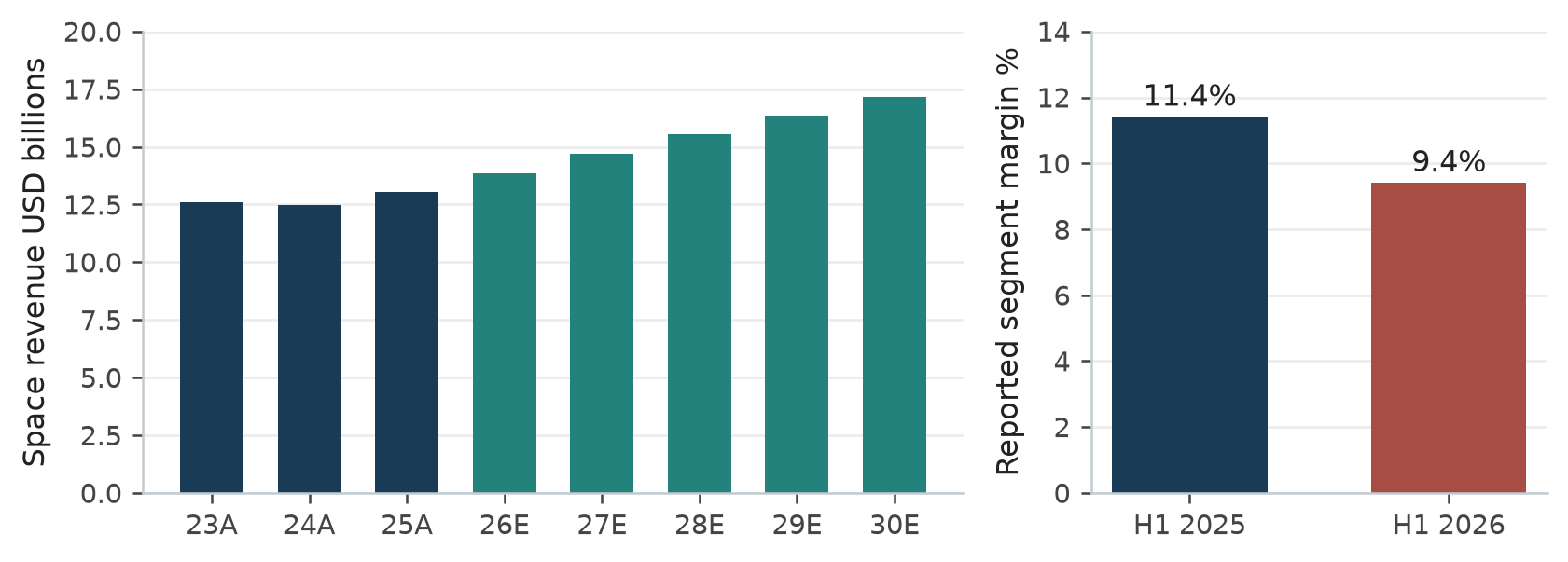
Base case expectation is that Space sales reach $17.2bn with an operating margin of 10.5% by 2030 supported by military demand and an increase in production. The base case expectation is that margins recover towards the end of the forecast.
3.3 Thesis 3: F35 franchise anchors earnings
The F35 franchise is an important part of the revenue and earnings base for the Aeronautics segment. Approximately 27% of consolidated sales were attributable to the program in 2025.
LMT delivered 191 aircraft in 2025 compared to 110 in 2024. However, in 1H26 deliveries were 51 compared to 97 in 1H25.
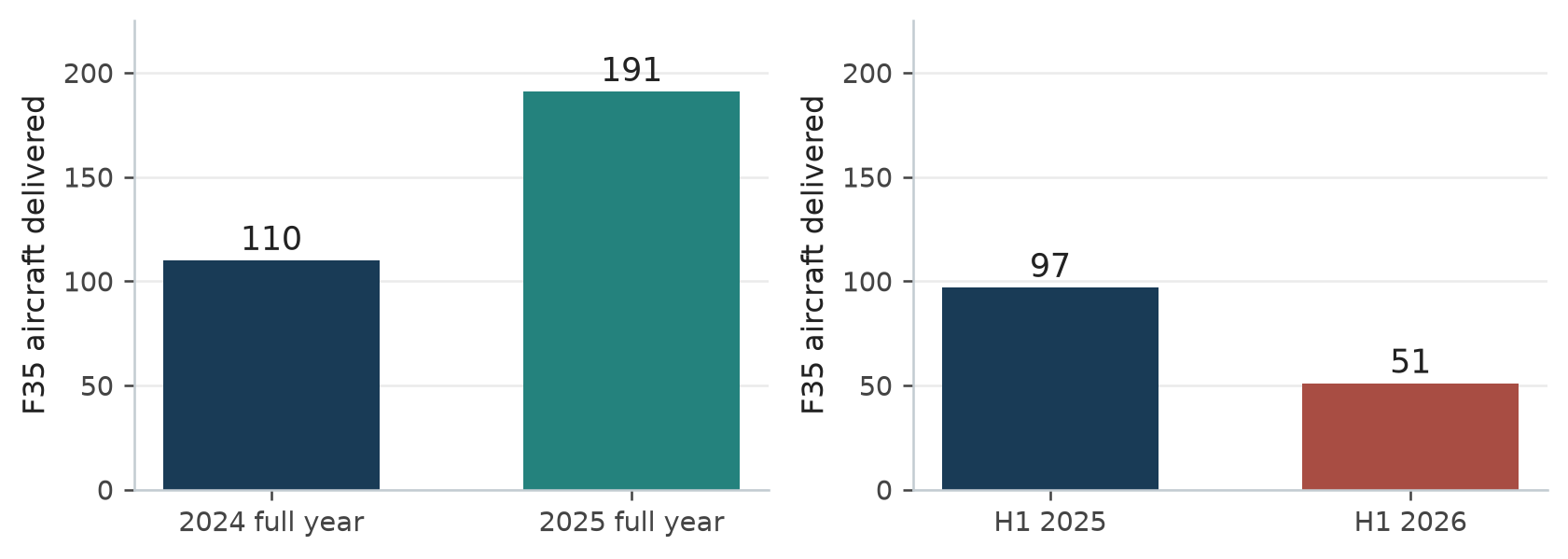
According to the Governmental Accountability Office’s (GAO) review, published in September 2025, much of the previous delay was due to issues with Technology Refresh 3 (hardware and software upgrade) and a large proportion of the airplanes delivered in the early part of 2025 were originally scheduled in previous years. Additionally, as the GAO noted in June 2026, there has been a material reduction in the F35 fleet’s Full Mission Capable (operational readiness) rate from 38% in FY21 to 25% in FY25. This adds pressure on the sustainment economics which are being scrutinised with a change in incentive, oversight and affordability.
Base case expectation is that Aeronautics revenues grow at 4% in 2027 and 2028 before moderating to a 3% growth rate by 2030. Operating margins are expected to grow from 9.2% in 2026 to 9.8% in 2030.
4. Business Model
Lockheed Martin, the company, is engaged in aircraft production, missiles, helicopters, mission systems, and military space. Aircraft manufacturing is the largest part of the business, and if Lockheed Martin can grow the missile business, it will be able to diversify its earning. It faces high qualification standards and is in a good position on many programs, but it only sells to governments.
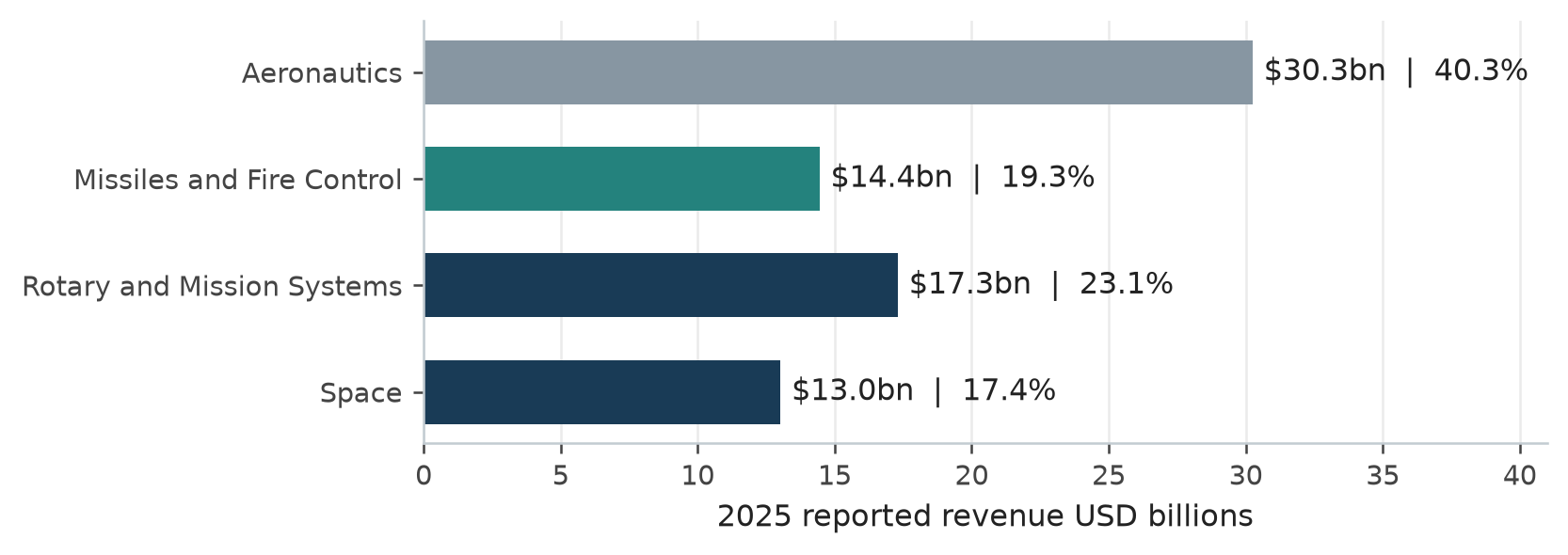
Approximately 71% of Lockheed Martin’s sales in 2025 were to the US government. Approximately 60% of sales are under fixed price contracts, which means that the company is relying on the government to appropriate the funds, and that it must negotiate a price before production starts. If the price is set correctly, then Lockheed Martin can gain profits as it improves production, but if there are cost increases from technical issues or from suppliers, then Lockheed Martin may lose money on a program.
5. Industry Overview (Porter’s 5 Forces)
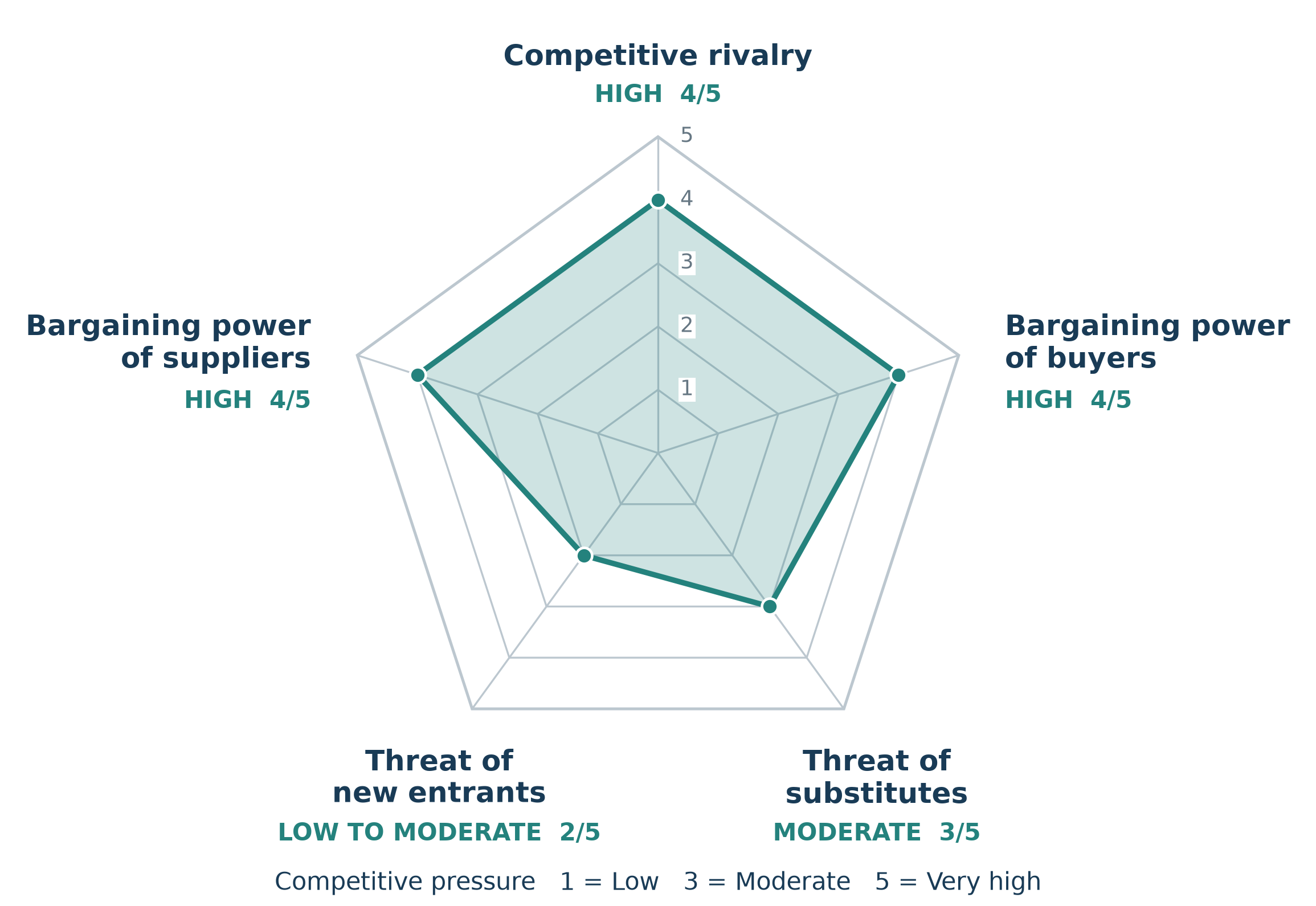
The intensity of rivalry among competitive forces is high. There are many companies in the same sector like Boeing, Northrup Grumman, RTX, General Dynamics, L3Harris, etc. that are competing for the big awards. However, the competitive bidding limits pricing while they have the recurring work from programs they are already involved in. The ability to deliver what they say at the right cost is critical to getting the contracts they want profitably.
The bargaining power of buyers is high. A large amount of their revenue (72% in 2025) comes from the US Government. As such, they are at the mercy of the US Government to determine how much money will be put into certain programs and the terms of those contracts. However, as long as certain programs are deemed strategic, the demand will be there. However, since the US Government has to approve the funding every year, there will always be pressure to keep costs down, limiting pricing power.
The threat of substitute products or services is moderate. There are always attempts to find lower cost solutions, and with the advent of autonomous technology and commercial space capabilities there will be attempts to change the way certain things are done. However, the specialized nature of what they do will help keep them relevant as things need to be modernized over time.
The threat of new entrants is low/moderate. With the long product development cycles, level of regulation, and technical complexity it will be difficult for new entrants to compete with LMT. However, we are seeing more startup companies try and compete in some of the more new technology areas. However, LMT has a pretty good history of being able to execute on programs, which will be important when it comes to many of the defense programs.
The bargaining power of suppliers is high. There are a lot of single-source items that take a long time to qualify. This presents risk to cost and delivery. LMT tries to limit this by doing long term agreements, finding other places to get the same products, or holding more inventory. However, when suppliers have issues it can be difficult to turn backlog into revenue
6. Valuation
6.1 DCF
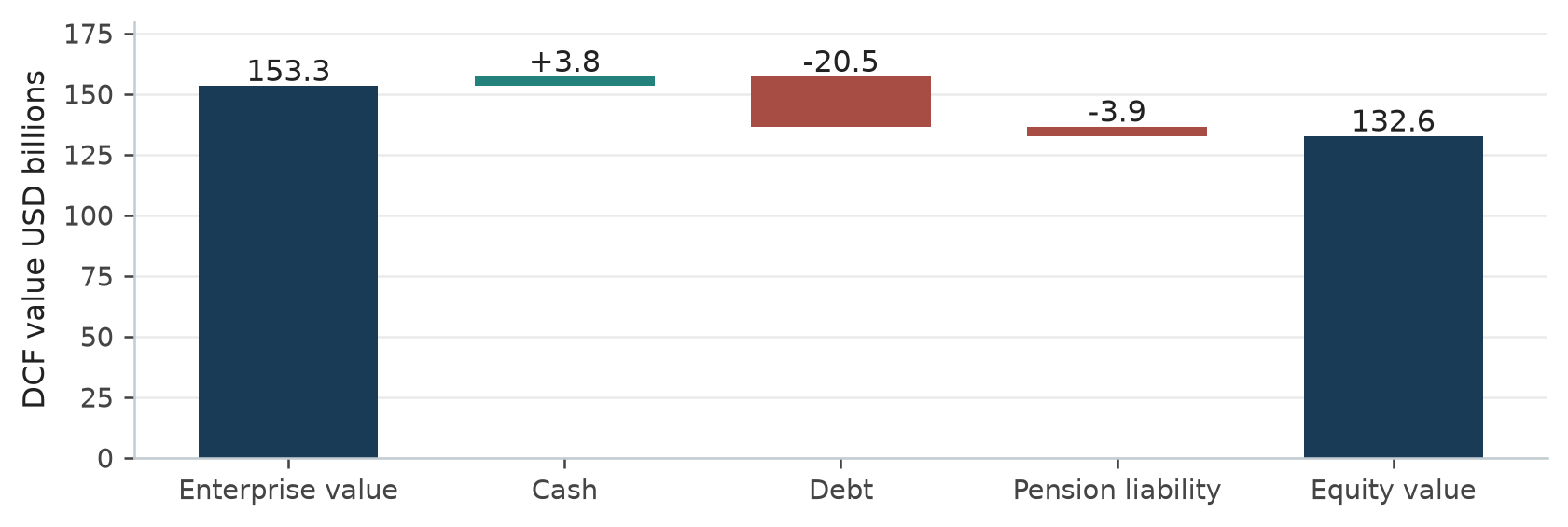
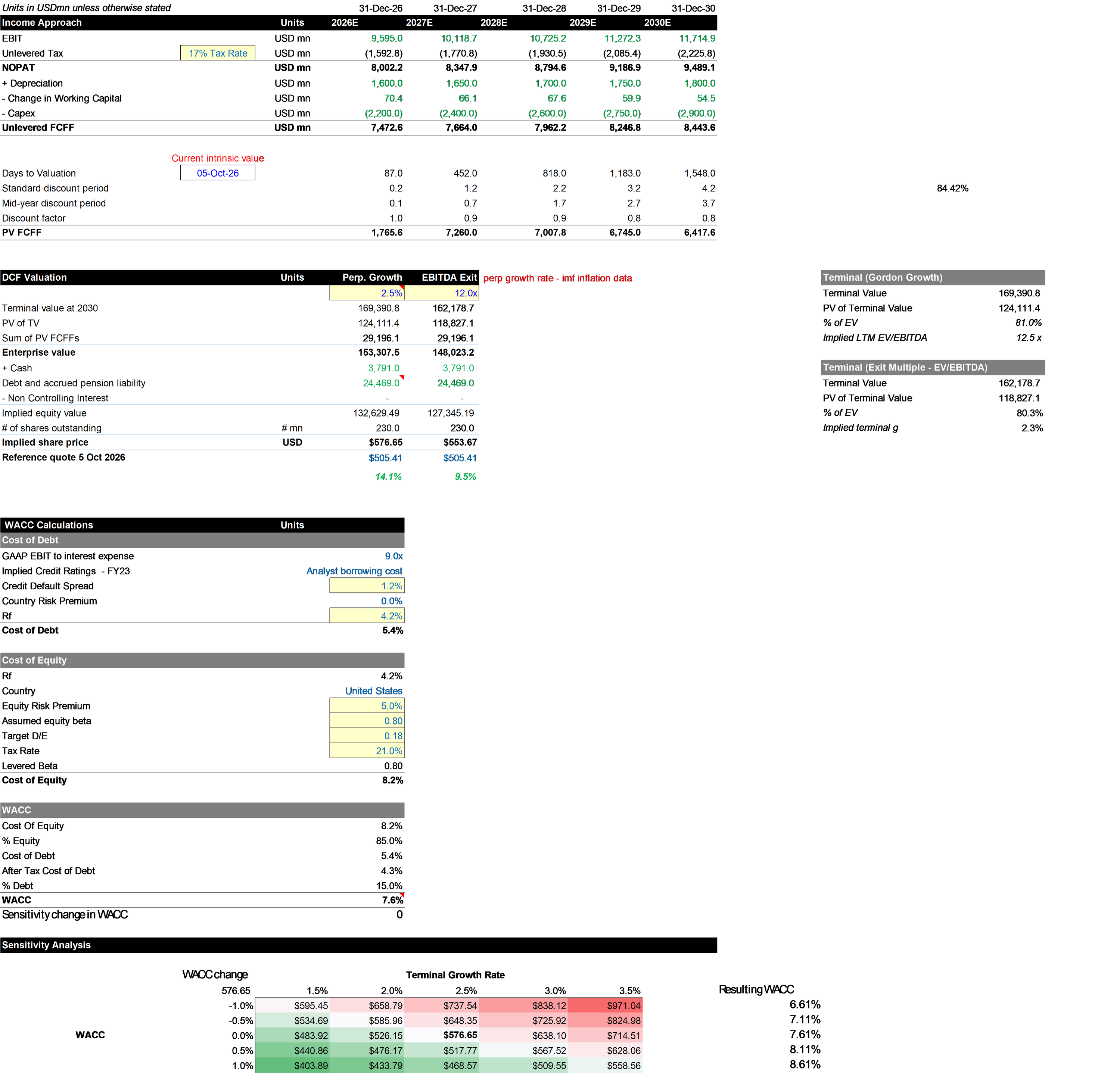
Our DCF model supports a price target of $576.65 per share. The valuation discounts unlevered free cash flow using a 7.61% weighted average cost of capital and 2.5% perpetual growth. At the $505.41 reference price on 5th Oct, it implies 14.1% price upside. Adding the assumed $13.80 annual dividend gives 16.8% estimated total return over a 12-month investment horizon. The dividend is included once in that return estimate.
6.2 Football Field Valuation
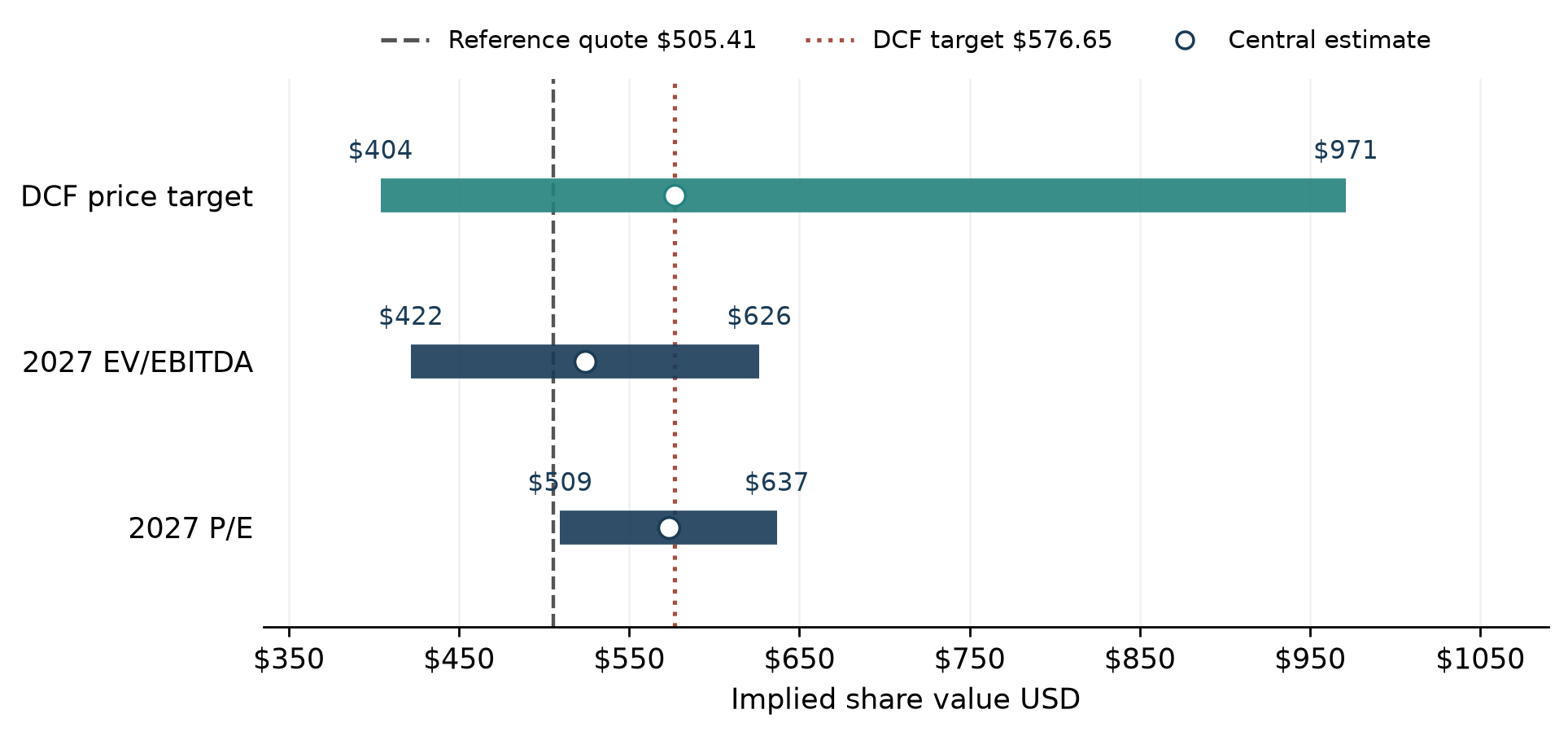
The DCF range tests WACC from 6.61% to 8.61% and terminal growth from 1.5% to 3.5%. The 2027 EV/EBITDA range uses 10 to 14 times, while the P/E range uses 16 to 20 times.
7. Financial Analysis
7.1 Overview of Financial Analysis
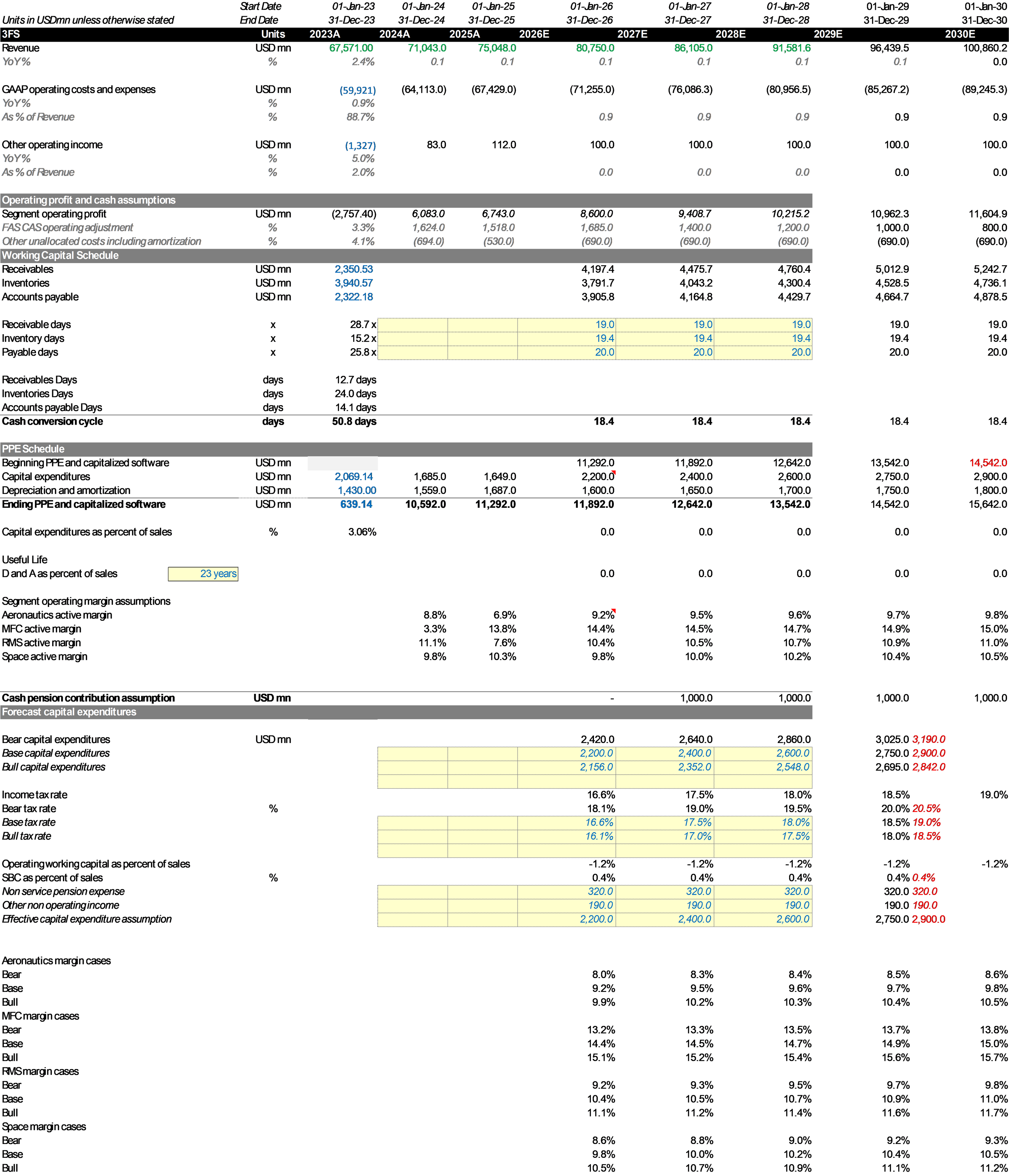
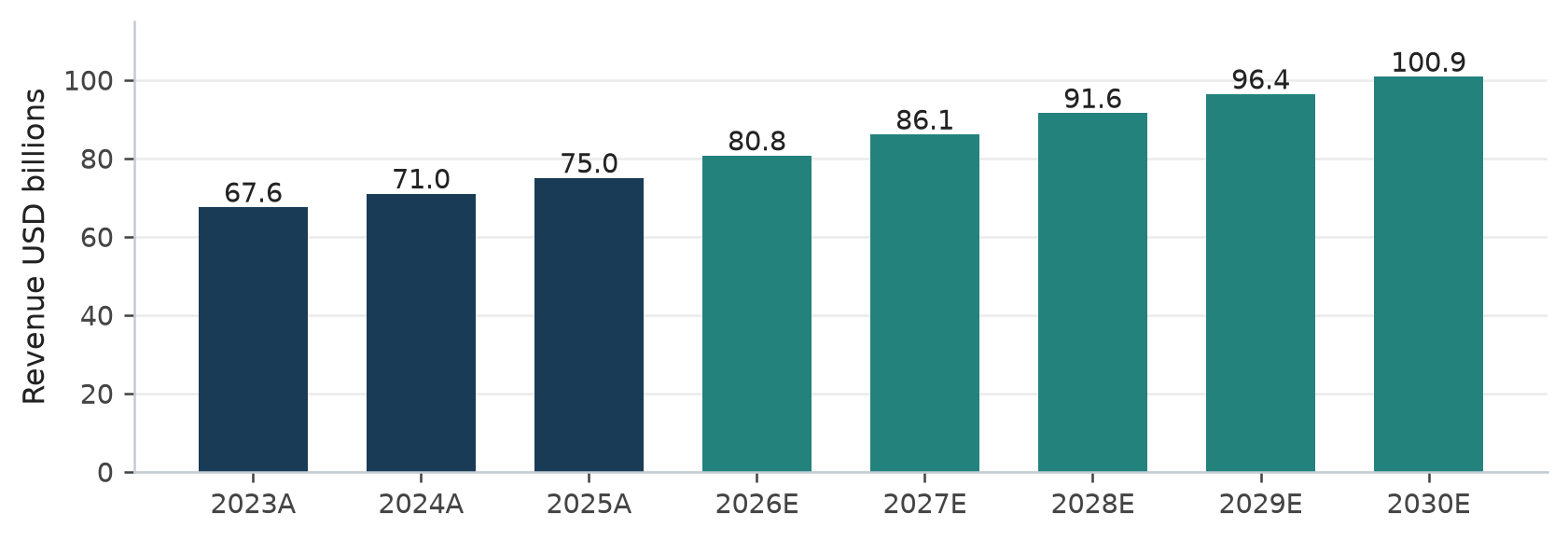
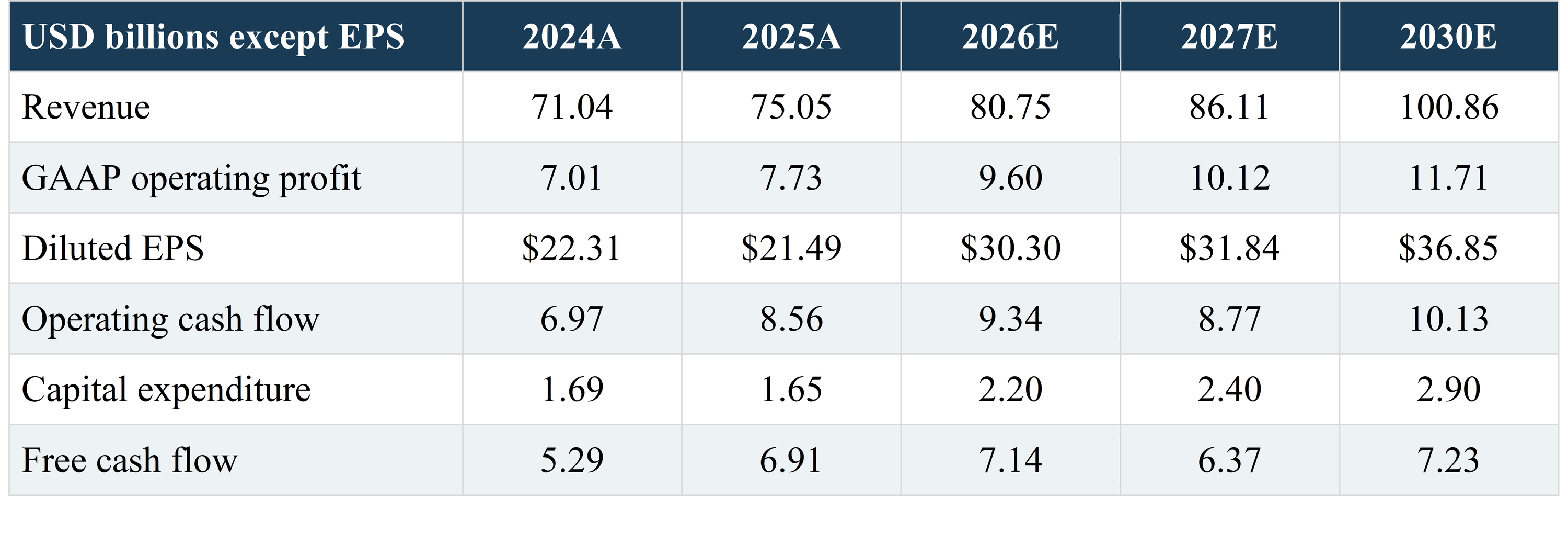
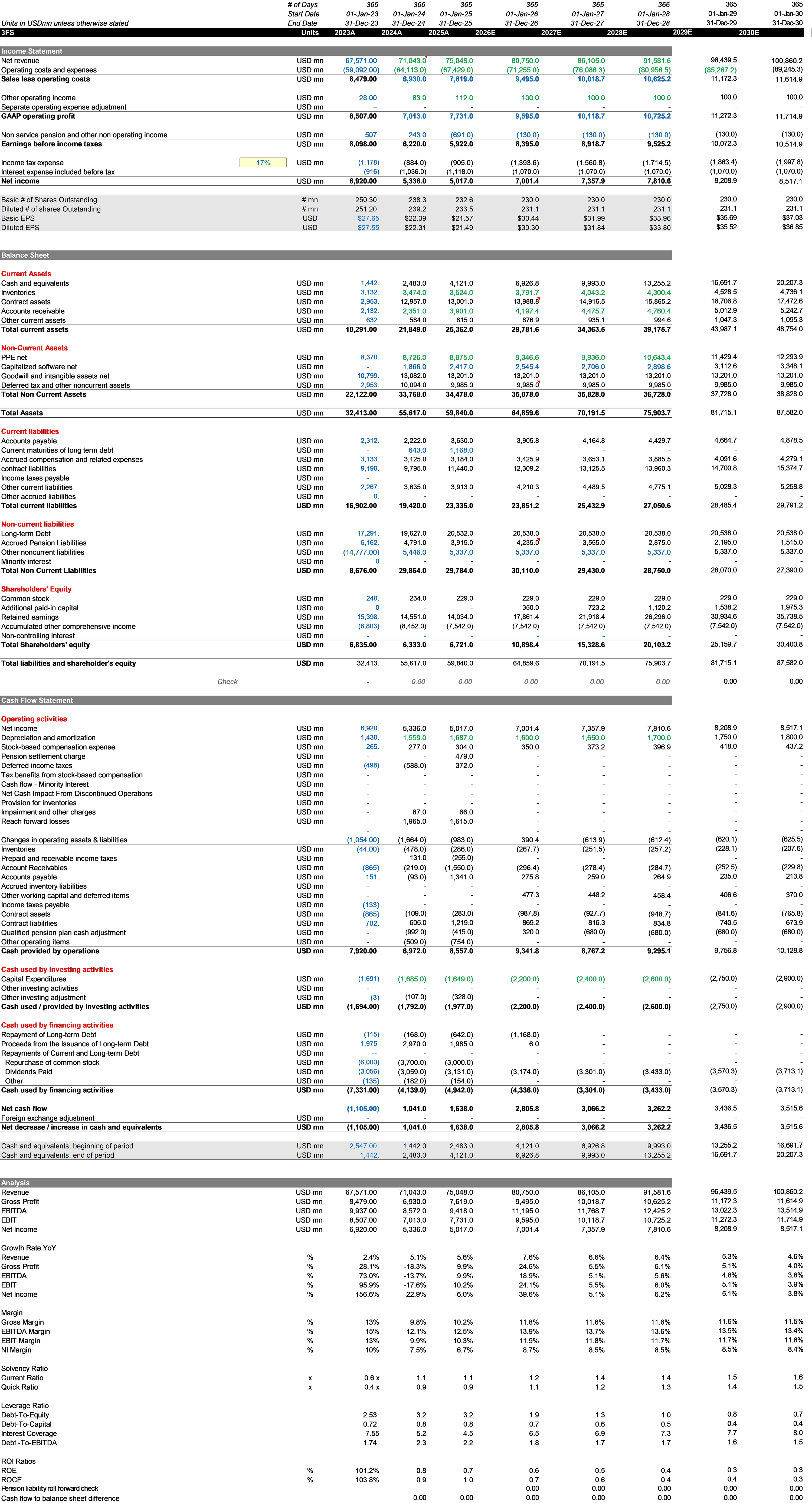
Sales rise 7.6% to $80.75bn in the 2026 base case, while diluted EPS rebounds from $21.49 to $30.30. The recovery includes normalization after 2025 program charges. Revenue grows 5.7% annually from 2026 to 2030 and EPS rises 21.6%.
7.2 Growth exceeds cash conversion
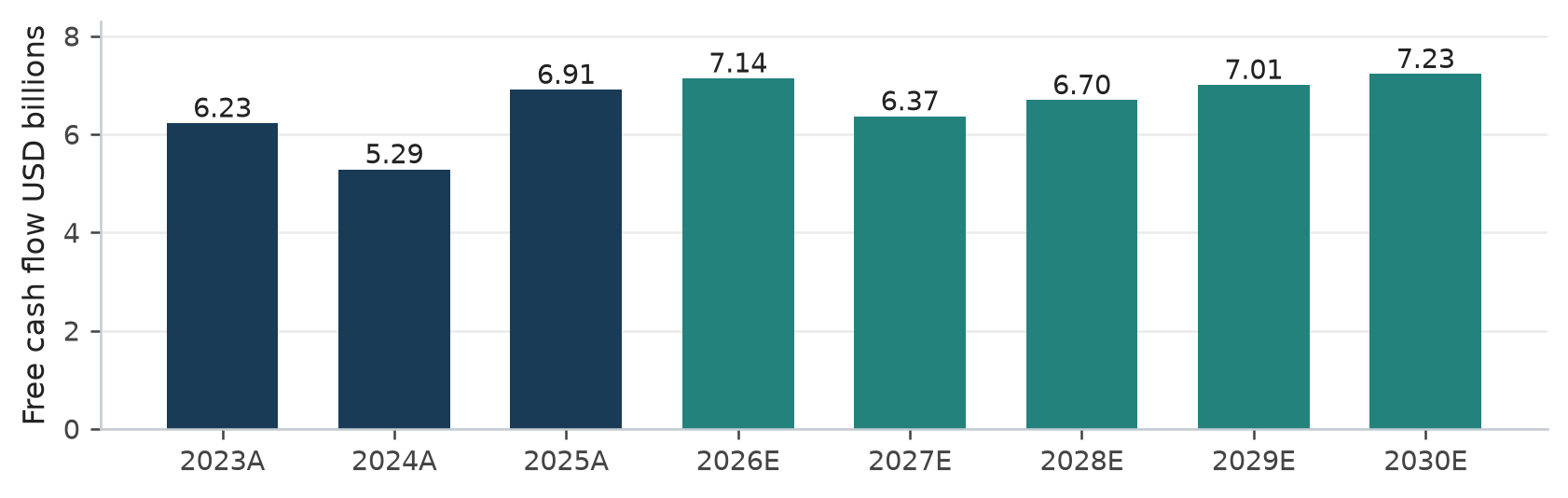
In 2026-2030, revenue and EPS grow by 5.7% and 21.6% annually. However, the free cash flow grows at only 1.2% annually. The free cash flow margin falls from 8.8% to 7.2%. The reason is that investment and the pension fund absorbs a large part of the earnings increase.
7.3 The pension fund and investment weigh on the return
In 2027, the free cash flow decreases to USD 6.37bn due to the resumption of the annual pension fund of USD 1bn. The company’s investment increases from USD 2.2bn in 2026 to USD 2.9bn in 2030. The number of diluted shares in circulation is assumed to be unchanged at 231.1m shares. Thus, the company does not buy back shares.
8. Risks & Mitigation
8.1 Execution Risk & Cost of Contract
Execution risk and cost of contract, including shortage of suppliers, delayed of F35 programme, and cost of scaling up Space business may affect timing of revenue recognition and potential margin squeeze. Around 60% of sales in 2025 will be fixed price contracts. Management tries to mitigate the risk by signing long-term contracts with suppliers, identifying qualified dual-source and multiple-source and building up inventory. Management also tries to limit losses by phasing investment for new programmes and improving quality & cost management.
8.2 Government Funding & Regulatory Risk
72% of sales in 2025 are to the US government, so uncertainty over annual government funding could lead to revenue being deferred to later years. Programs are subject to export restrictions, which could impact the potential for international sales. Risk is reduced by multi-year contracts for programs like THAAD and PAC-3 MSE. Demand from allied countries also reduces reliance on the US government as a customer.
Appendix
Appendix 1: DCF of LMT
Appendix 2: 3FS LMT
Appendix 3: Revenue Build
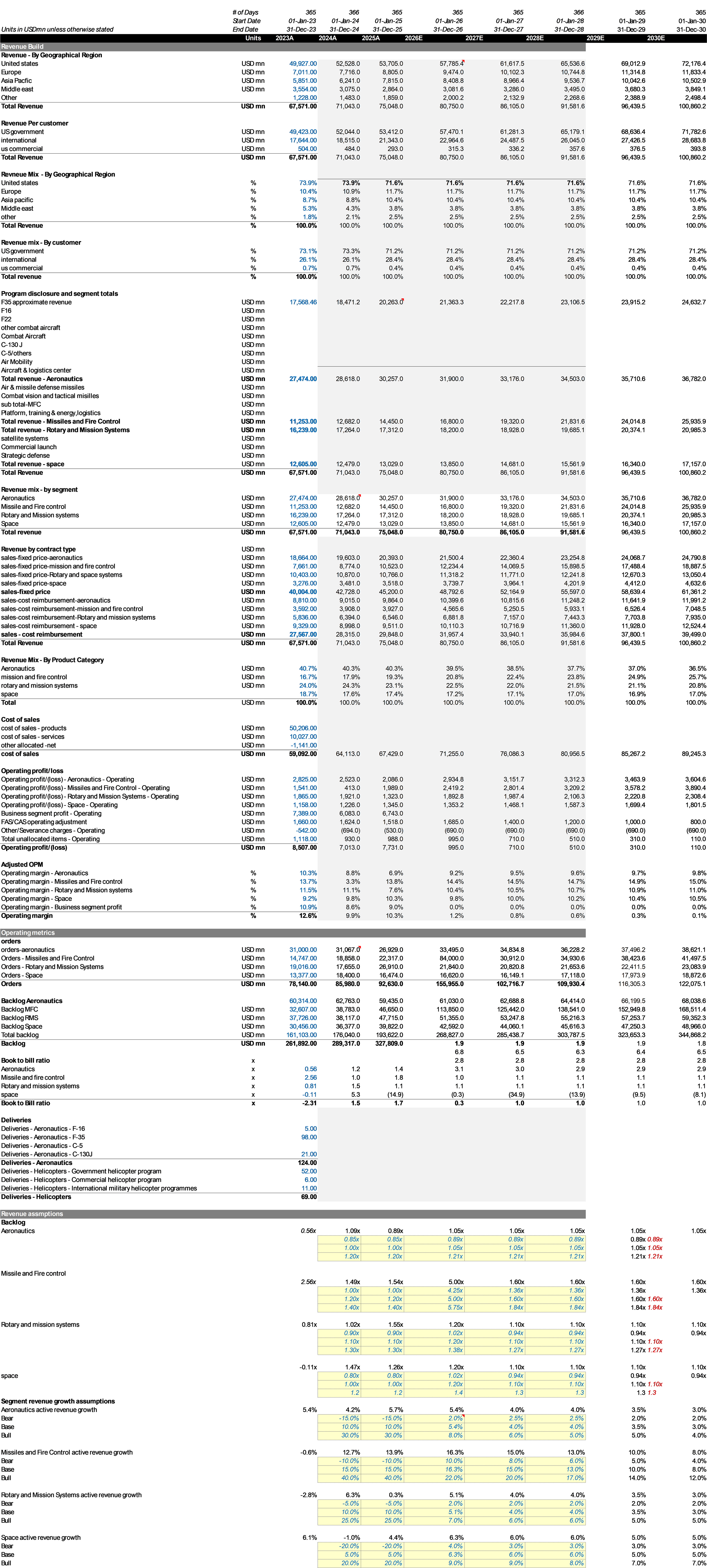
Appendix 4: Margin Build